
Replacing milestones with tasks
One task now owns the work, subtasks, review, files, and delivery. Here’s how the new model works.
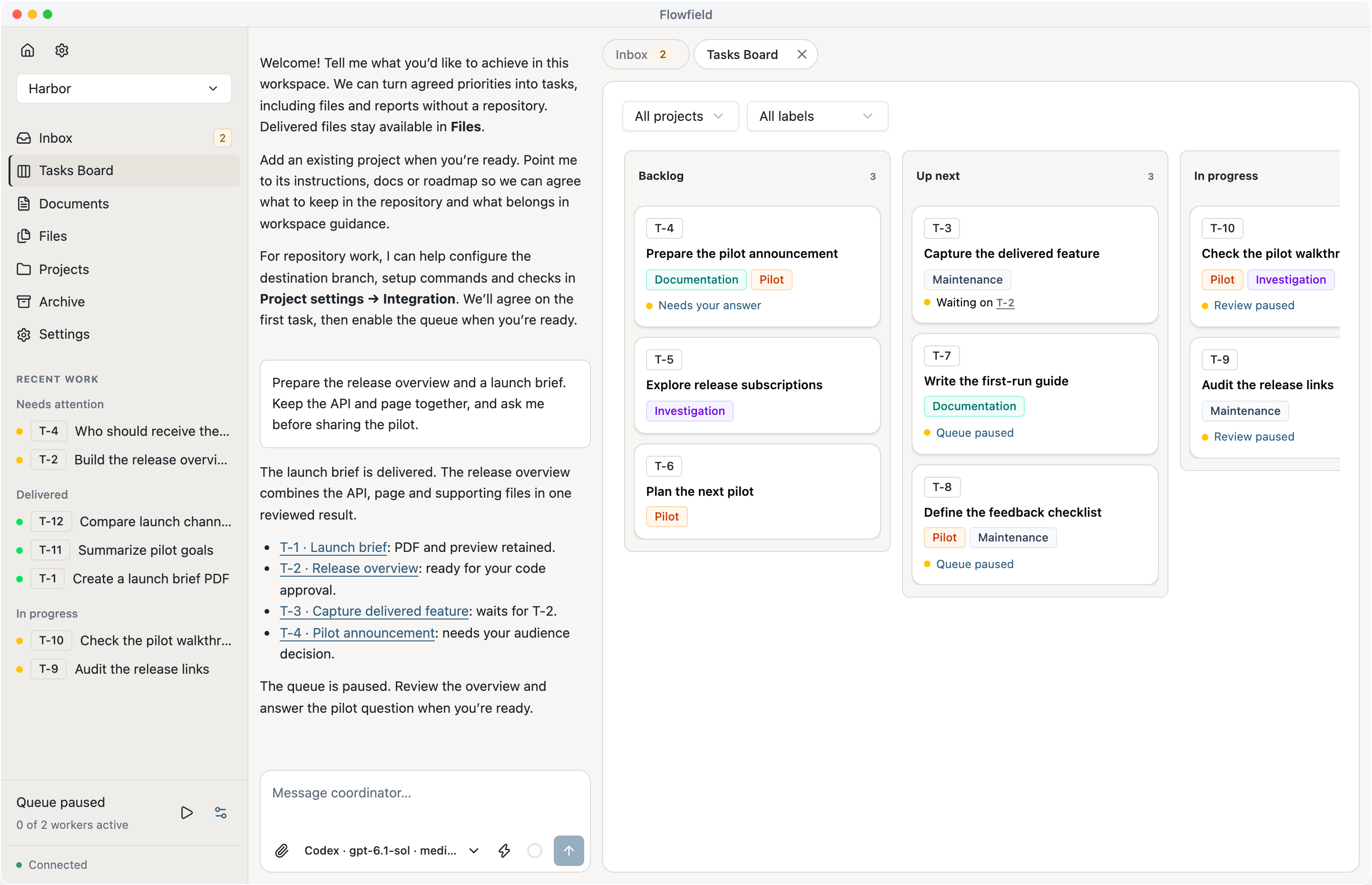
Flowfield previously split work between tasks and milestones. Tasks tracked individual contributions; milestones combined them for review and delivery. That meant maintaining two sets of descriptions, progress, and review settings for the same work.
We’ve removed milestones. A task now owns its description, success criteria, execution, review, files, and delivery. A task can be as small as “make a launch brief PDF” or as substantial as “add CSV import with validation and error reporting.”
You define the work with the Coordinator and track it on one workspace board. The same task connects its conversation, Inbox requests, and files. Code tasks use an existing project’s repository and environment. Reports and images can run without a repository.
Optional subtasks
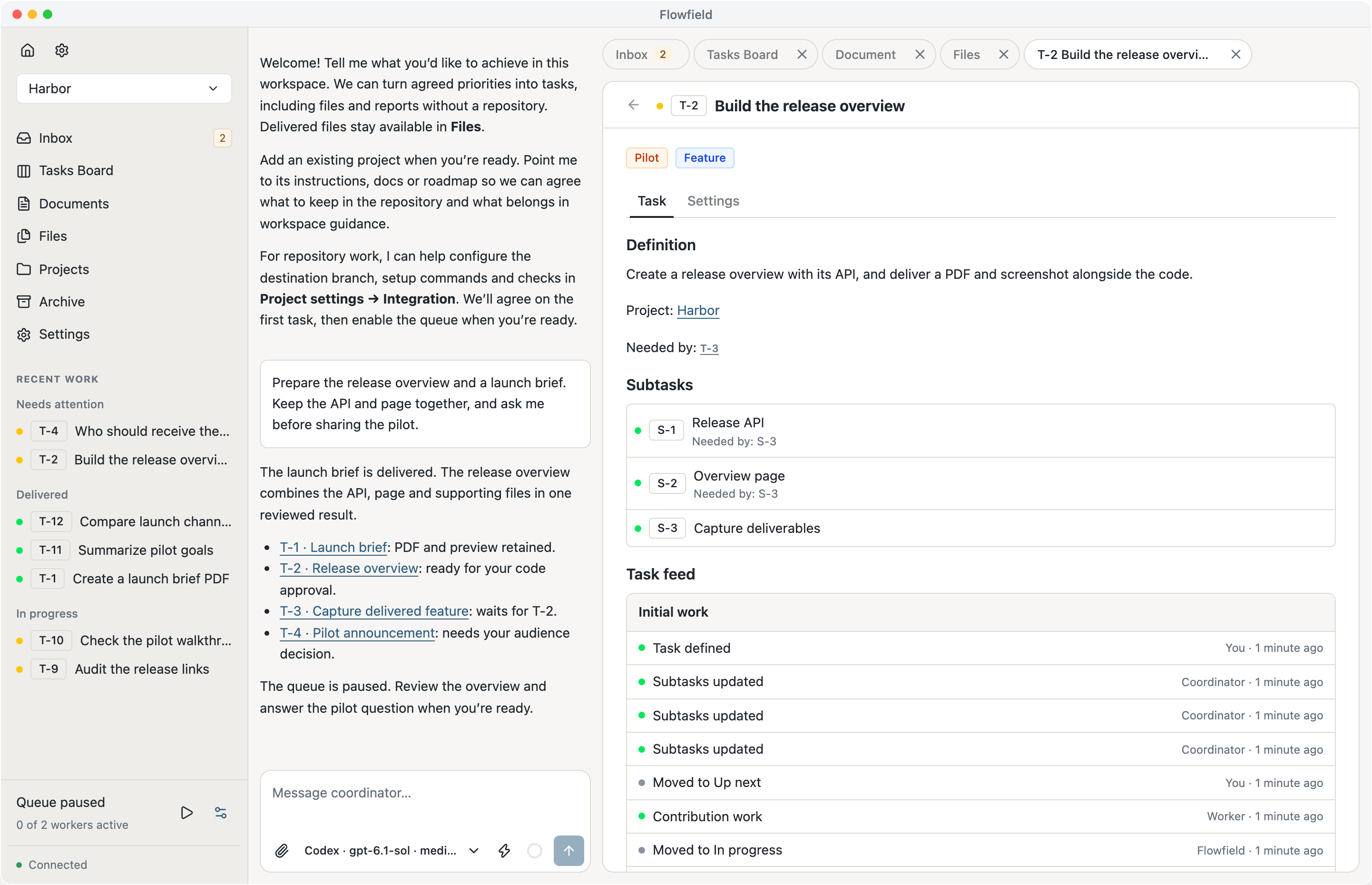
A task can run directly or contain subtasks. Use subtasks for work that benefits from separate workers or has real prerequisites. For CSV import, parsing and the upload interface could run in parallel, with integration work depending on both.
Subtasks have a single level of nesting and dependencies within their parent task. They contribute to one combined result and inherit the task’s execution settings. Review and final delivery stay with the parent task.
Dependencies between tasks
Tasks can depend on other tasks in the workspace, including tasks in different projects. A prerequisite must deliver its result before dependent work can proceed.
Each code task changes one repository. A feature spanning API and website repositories uses separate tasks with an explicit dependency. Subtasks handle contributions within a task; task dependencies connect separate deliverables.
Review and delivery
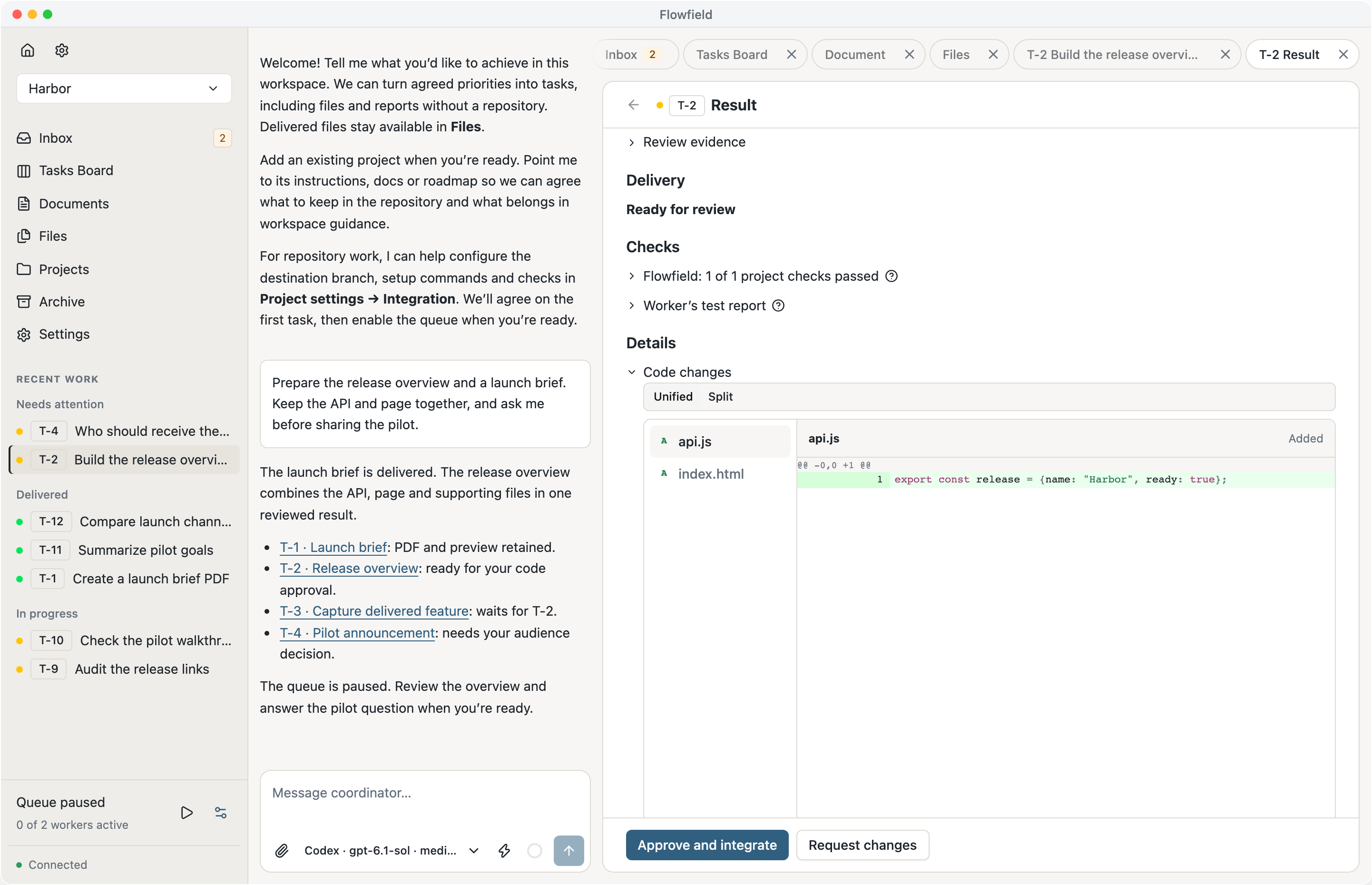
One reviewer checks the direct or assembled result against the task’s criteria, including code and selected files. Corrections can target the affected contribution while retaining completed work that is still valid.
Code delivery requires approval of the exact result and its destination. You can inspect changes and try the result before approving it. A passing review alone doesn’t authorize delivery. Code becomes Done after approved delivery is verified; complete reports and files can finish after review without an acknowledgment step.
Retained history and files
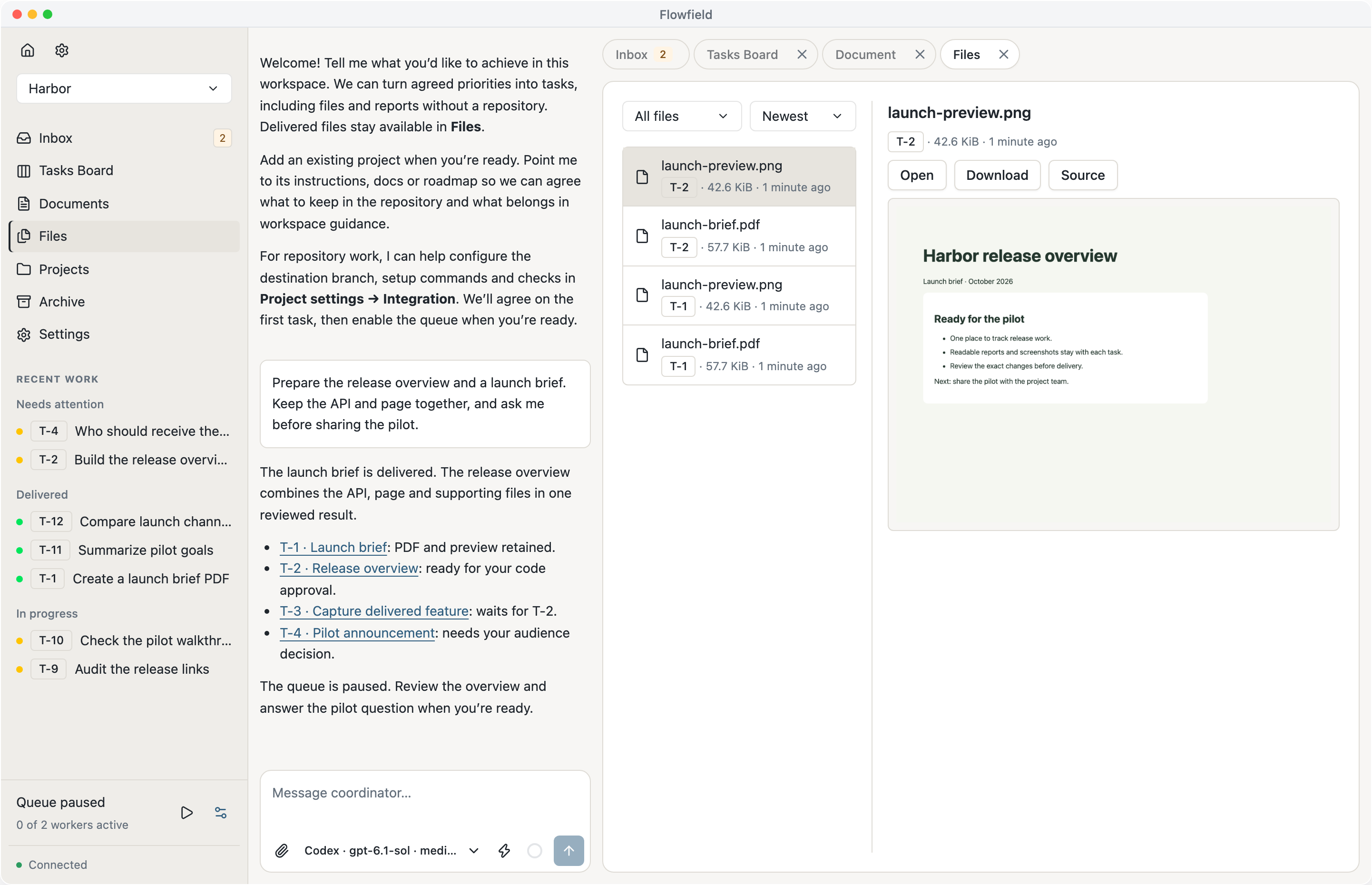
Inbox collects questions, review requests, and delivered results. The task feed keeps worker activity, answers, corrections, and reviews together. Prepared work records its selected document revisions and prerequisite results.
Files retains submitted outputs after worker cleanup, with supported previews and original downloads. Completed tasks keep their delivered results when a prerequisite changes later. Reopening a task preserves its earlier results.
Moving from the milestone model
The 0.6.0 transition did not migrate earlier task and milestone history. Keep the old data directory with its matching build to retrieve records, and use a separate directory for the task model. Existing repositories can be adopted again; their files and native agent credentials remain separate. See storage and recovery (opens in a new tab).